
Flavours of Mizoram: The Harvest Table You Need to Try

Mizoram, a region of hills, mist, and melody, is tucked away in the verdant folds of Northeast India. The region's food also reflects these qualities. The earthy, smoky, and comforting flavors of Mizoram are based on the soul-soothing simplicity of slow cooking, fermented treats, and seasonal produce. Fresh bamboo shoots, mustard greens, smoked meats, and herbs that grow naturally in the forests are the staples of Mizo cuisine, which is deeply rooted in the natural world.
This is your invitation to The Harvest Table, a celebration of traditional dishes that characterize Mizo kitchens, if you've ever wanted to take a culinary journey through Mizoram.
Let's check out some of the most famous Mizo dishes, along with thorough recipes, unique ingredients, and tips for bringing Mizoram's flavors into your home.
1. Bai – The Soul of Mizoram
Bai is perhaps the most beloved dish in every Mizo household — a comforting, one-pot vegetable stew that adapts to the season and whatever is fresh from the garden.
Ingredients for Bai
- 1 cup chopped mustard greens (or spinach)
- ½ cup bamboo shoot (fresh or fermented)
- ½ cup pumpkin or bottle gourd, diced
- 1 cup smoked pork or fish (optional but authentic)
- 2 green chilies, slit
- 1 tbsp sesame powder
- Salt to taste
- 2 cups water
Method for Bai
- In a deep pot, combine all the ingredients for Bai except sesame powder.
- Boil on medium heat until the vegetables turn tender.
- Add sesame powder and simmer for 5–7 minutes more.
- Adjust salt, mash lightly, and serve hot.
Simple, hearty, and nourishing — Bai embodies the clean and wholesome flavours of Mizoram’s harvest.
2. Vawksa Rep – Smoked Pork Perfection
No Mizo feast is complete without Vawksa Rep, a signature smoked pork dish that’s both fiery and fragrant. The pork is smoked, then stir-fried with local herbs and bamboo shoot — pure heaven for meat lovers.
Ingredients for Vawksa Rep
- 500g smoked pork, cut into cubes
- ½ cup bamboo shoot
- 1 onion, sliced
- 2–3 green chilies
- 1 tbsp ginger-garlic paste
- 1 tsp red chili flakes
- Salt and black pepper to taste
Method for Vawksa Rep
- Heat a pan, add the smoked pork and let it release its fat.
- Add onions, ginger-garlic paste, and chilies; sauté well.
- d bamboo shoot and chili flakes, stir-frying until the pork turns slightly crisp.
- Adjust seasoning and serve hot with sticky rice.
The magic of Vawksa Rep lies in the smoky aroma that fills the kitchen — a true essence of Mizo culinary artistry.
3. Chhum Han – The Vegetable Symphony
Chhum Han is the lighter cousin of Bai — a vibrant mix of steamed vegetables that celebrates the freshness of Mizoram’s hills.
Ingredients for Chhum Han
- 1 cup cabbage, chopped
- ½ cup beans, sliced
- ½ cup carrots, julienned
- ½ cup pumpkin or bottle gourd
- Salt to taste
- 1 tbsp mustard oil
Method for Chhum Han
- Steam all the vegetables until tender.
- Toss them with salt and a drizzle of mustard oil.
- Serve warm as a side dish with rice or smoked meat.
Fresh, clean, and humble — Chhum Han proves that simplicity can be delicious.
4. Misa Mach Poora – Grilled Prawn Delight
A star of Mizo feasts, Misa Mach Poora is a grilled prawn dish infused with the earthy aroma of charcoal and the zing of local spices.
Ingredients for Misa Mach Poora
- 10 large prawns, cleaned and deveined
- 1 tbsp mustard oil
- ½ tsp turmeric powder
- 1 tsp red chili flakes
- 1 small onion, finely chopped
- 2 green chilies, chopped
- Salt and lemon juice to taste
Method for Misa Mach Poora
- Marinate prawns with all ingredients for 15–20 minutes.
- Grill or roast over charcoal until they turn golden and slightly charred.
- Serve Misa Mach Poora with steamed sticky rice and lemon wedges.
This dish is smoky, tangy, and wonderfully bold — a testament to the coastal touches in Mizo cuisine.
5. Arsa Buhchiar – The Festive Chicken Porridge
During Mizo harvest festivals, Arsa Buhchiar — a rice and chicken porridge — takes center stage. It’s comfort in a bowl, balancing warmth and nourishment.
Ingredients for Arsa Buhchiar
- ½ cup rice (short-grain)
- 300g chicken, cut into pieces
- 1 onion, chopped
- 1-inch ginger, crushed
- 3–4 garlic cloves, minced
- 1 tsp black pepper
- Salt to taste
- 4 cups water
Method for Arsa Buhchiar
- Wash rice and chicken together; boil in water.
- Add ginger, garlic, onion, and black pepper.
- Cook on low heat until the rice breaks down into a porridge-like consistency.
- Season with salt and serve hot.
Arsa Buhchiar is both festive and restorative — a bowlful of Mizo warmth that feels like a hug.
6. Bekang Bai – Fermented Soybean Stew
Mizo cuisine loves fermentation, and Bekang Bai, made from fermented soybeans, is a rich, umami-packed dish.
Ingredients for Bekang Bai
- ½ cup fermented soybean (bekang)
- 1 cup chopped mustard greens
- 1 small brinjal, diced
- 1 tomato, chopped
- 1–2 green chilies
- Salt to taste
- Water as needed
Method for Bekang Bai
- Boil the fermented soybean with water until soft.
- Add all vegetables and simmer until tender.
- Mash lightly, season with salt, and serve hot.
The earthy, deep flavours of Bekang Bai make it an essential at any Mizo harvest table.
7. Sawhchiar – The All-Time Favourite Rice Dish
Sawhchiar is Mizoram’s answer to biryani — a wholesome rice dish usually cooked with meat or chicken.
Ingredients for Sawhchiar
- 1 cup rice
- 250g chicken or smoked pork
- 1 onion, sliced
- 1-inch ginger, crushed
- 2 garlic cloves, minced
- 2 cups water
- Salt to taste
Method for Sawhchiar
- In a pot, add meat, ginger, garlic, and salt; cook until slightly browned.
- Add rice and water, and cook until everything softens and blends.
- Serve Sawhchiar hot with a side of Chhum Han or Bai.
Comforting, aromatic, and hearty — Sawhchiar is a daily staple that never gets old.
8. Panch Phoron Bai – Five-Spice Vegetable Stew
This variation of Bai uses the classic Bengali five-spice blend, making it a beautiful cross-cultural dish often enjoyed in border areas.
Ingredients for Panch Phoron Bai
- 1 tsp panch phoron (five-spice mix)
- 1 cup mixed vegetables (pumpkin, beans, cabbage)
- 1 small brinjal, diced
- Salt to taste
- 1 tbsp mustard oil
- 2 cups water
Method for Panch Phoron Bai
- Heat mustard oil and add the panch phoron; let it splutter.
- Add vegetables and sauté lightly.
- Pour in water, cover, and cook till vegetables are tender.
- Season and serve hot.
Panch Phoron Bai bursts with aroma — a fragrant twist to the traditional Bai.
9. Sanpiau – The Mizo Street Favourite
Sanpiau is the street food darling of Mizoram — a sticky rice porridge topped with herbs, sauces, and sometimes minced meat.
Ingredients for Sanpiau
- 1 cup sticky rice
- 3 cups water
- ½ cup minced chicken or pork (optional)
- 1 tbsp soy sauce
- 1 tbsp chopped coriander leaves
- ½ tsp black pepper
- Lemon juice and chili flakes
Method for Sanpiau
- Cook sticky rice until it turns into a porridge consistency.
- Add cooked minced meat if using.
- Top with soy sauce, pepper, coriander, lemon, and chili flakes.
- Serve Sanpiau hot as a comforting snack.
Every spoonful of Sanpiau tells a story — of busy Aizawl evenings and the homely warmth of Mizo kitchens.
10. Bai with Smoked Fish – A Rustic Classic
A variation of the beloved Bai, this version uses smoked fish for an extra layer of depth.
Ingredients for Bai with Smoked Fish
- 1 cup mustard greens
- ½ cup bamboo shoot
- ½ cup smoked fish
- 2 green chilies
- 1 tbsp sesame powder
- Salt to taste
- 2 cups water
Method for Bai with Smoked Fish
- Combine all ingredients in a pot except sesame powder.
- Boil till vegetables are tender and fish softens.
- Add sesame powder, simmer, and mash lightly.
- Serve with sticky rice.
Smoky, savory, and subtly nutty — this Bai with Smoked Fish variation is pure Mizoram on a plate.
A Feast from the Hills
More than just cuisine, Mizoram's flavors capture the simplicity, freshness, and profound reverence for the natural world of the region. Every dish, whether it's the hearty Bai, the smoky Vawksa Rep, or the modest Chhum Han, narrates a tale of harvest, family, and unity.
So, prepare your own Harvest Table, set out the sticky rice, light a little smoke, and allow the flavors of Mizoram to remind you of the true deliciousness of simplicity. Share your preparation with like-minded food enthusiasts on Foodism. Download the app now.
Related Blogs

Celebrate Onam and Raksha Bandhan with the Foodism x Orika
304 Views

The Culinary Synergy: How 5 Iconic Brands Cooked Up Over 1,000 Recipes
409 Views
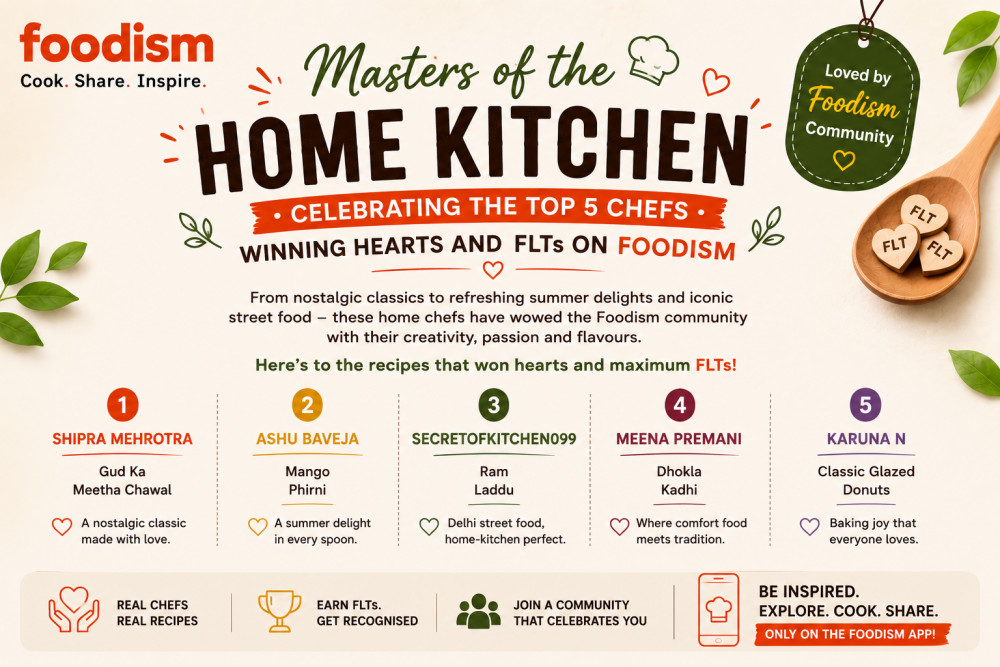
Masters of the Home Kitchen: Celebrating the Top 5 Chefs Winning Hearts and FLPs
396 Views

Sweet Sensations: 5 Trending Dessert Recipes Winning Over Foodism
324 Views

5 Trending Recipes on Foodism App You Need to Try
273 Views
